|
|
| (9 intermediate revisions by 4 users not shown) |
| Line 1: |
Line 1: |
| <metadesc>Communicate over USB with sensors, controllers and relays with Phidgets! Program in Windows using a wide variety of programming languages.</metadesc> | | <metadesc>Communicate over USB with sensors, controllers and relays with Phidgets! Program in Windows using a wide variety of programming languages.</metadesc> |
| [[Category:OS]] | | [[Category:OS]] |
| {|
| |
| |style="vertical-align:middle; width: 60%;"|
| |
| ==Getting Started with Windows==
| |
| Welcome to using Phidgets with Windows!
| |
|
| |
|
| If you are ready to go, the first step in creating Windows applications with Phidgets is installing our libraries.
| | ==Quick Downloads== |
| |{{TOC limit|2}}
| | Our libraries support Windows 8 and newer. |
| |}
| |
| ===Install===
| |
| To install our libraries, download the installer for your system:
| |
| *[{{SERVER}}/downloads/phidget22/libraries/windows/Phidget22-x86.exe 32-bit Installer Download]
| |
| *[{{SERVER}}/downloads/phidget22/libraries/windows/Phidget22-x64.exe 64-bit Installer Download]
| |
|
| |
|
| Before installing our libraries, be sure to read our [[Software License]].
| | *[https://cdn.phidgets.com/downloads/phidget22/libraries/windows/Phidget22-x64.exe Installer Download (64-bit)] |
| | *[https://cdn.phidgets.com/downloads/phidget22/libraries/windows/Phidget22-ARM64.exe Installer Download (ARM64)] |
| | *[https://cdn.phidgets.com/downloads/phidget22/libraries/windows/Phidget22-x86.exe Installer Download (32-bit)] |
|
| |
|
| When prompted, continue with the installation:
| | ===Other Resources=== |
| [[image:Windows_Install.png|link=|center]] | | * [[OS - Windows Advanced Information|Windows Advanced Information]] |
| | *[https://cdn.phidgets.com/downloads/phidget22/libraries/windows/Phidget22-windevel.zip Windows Development Files] |
| | * [https://www.phidgets.com/downloads/phidget22/libraries/windows/ Previous Releases] |
|
| |
|
| | ==Getting Started with Windows== |
| | ===Install=== |
| | To get started, download the appropriate [[#Quick Downloads|installer]] for your machine from the list above. This will install the Phidget Control Panel, a powerful tool that will help you develop your Phidget applications. |
|
| |
|
| The libraries are now installed on your machine. Next, let's verify that they are working properly.
| | ===Phidget Control Panel=== |
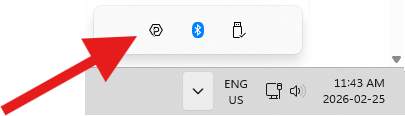
| | After installing, you can find the application through your system tray, or by opening the start menu and searching for ''Phidget Control Panel''. |
|
| |
|
| ''For instructions on installing our libraries without an installer, check out the [[OS - Windows Advanced Information]] page.''
| |
|
| |
|
| ===Verify=== | | [[Image:Os_windows_systemtray.png|link=|center]] |
| The best way to verify that your libraries are working properly is to use the Phidget Control Panel. The control panel is a powerful tool that will help you develop your Phidgets applications. Get started by following the instructions below:
| |
|
| |
|
|
| |
|
| Find the [[File:Ph.jpg|link=]] icon in the taskbar. If it is not there, open up the start menu and search for ''Phidget Control Panel''
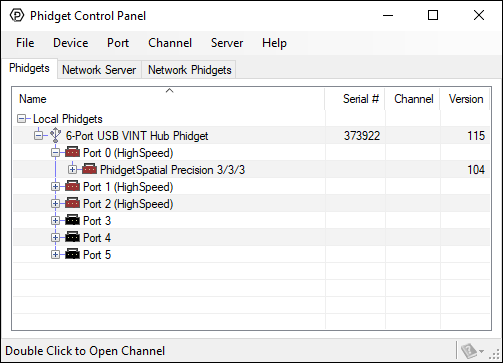
| | After opening, you will see all the Phidgets that are plugged into your machine, as well as any Phidgets that are on your network. |
| [[File:Windows PhidgetTaskbar.PNG|link=|center]]
| |
|
| |
|
|
| |
|
| Next, double-click on the Phidgets icon to bring up the Phidget Control Panel. You can now see all the Phidgets that are plugged into your machine, as well as any Phidgets that are on the network:
| |
| [[File:Windows ControlPanel General.PNG|link=|alt=Windows Control Panel General|center]] | | [[File:Windows ControlPanel General.PNG|link=|alt=Windows Control Panel General|center]] |
|
| |
|
|
| |
|
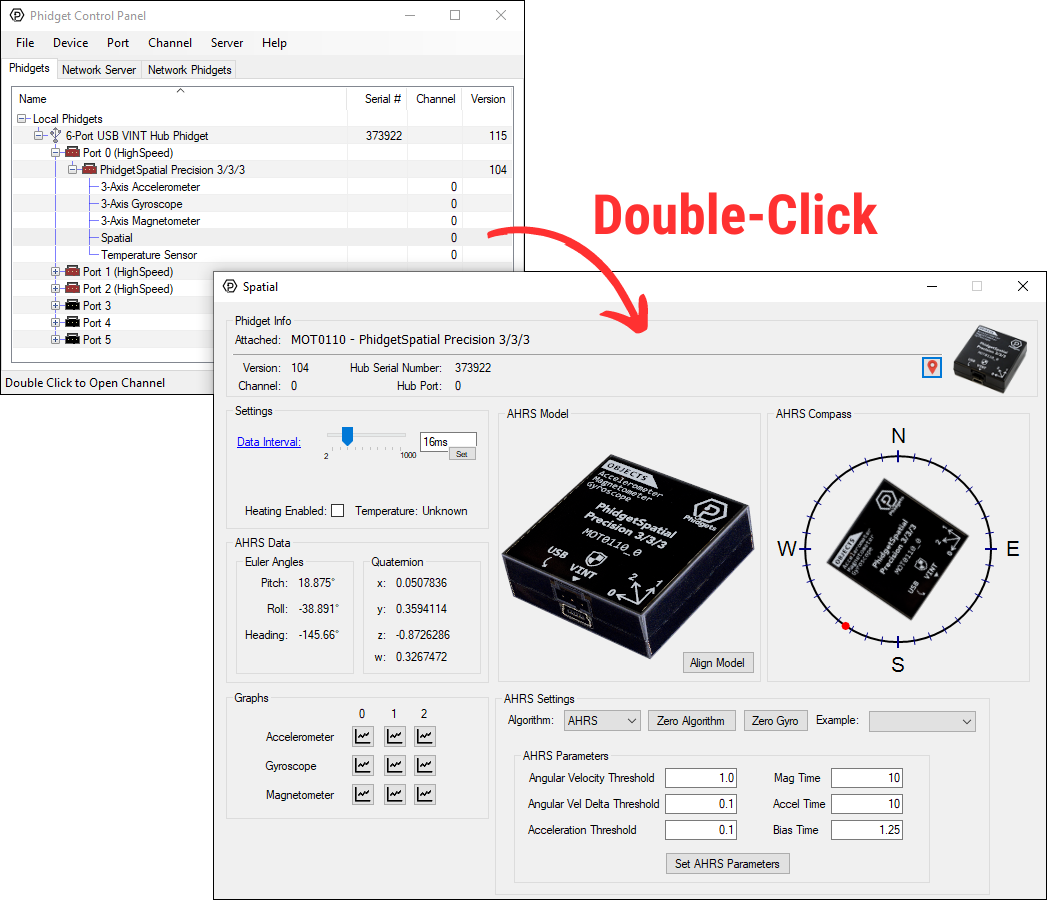
| Click on the '''+''' beside a device to expand it so that you can see all available channels. Double-click on one of these channels to open up a window that lets you interact with it.: | | Click on the '''+''' beside a device to expand it so that you can see all available channels. Double-click on one of these channels to open up a window that lets you interact with it. |
| [[File:Windows ControlPanelChannel.PNG|link=|alt=Windows Control Panel General|center]]
| |
| | |
| | |
| The Phidget Control Panel can be used for testing devices, updating firmware, enabling a Phidget Network Server, and more! Visit the [[Phidget Control Panel|Phidget Control Panel page]] for more information.
| |
| | |
| | |
| Your Phidget is now able to communicate with your development machine. The next step is selecting a programming language so you can start to write some code!
| |
| | |
| ==Programming==
| |
| Ready to write some code? Select one of the programming languages below:
| |
| | |
| {{Programming_Languages_Table}}
| |
| | |
| ==Phidget Network Server==
| |
| The Phidget Network Server is an extremely useful tool that allows you to remotely control Phidgets over your network. If you haven't already, check out the [[Phidget Network Server]] page for a complete overview.
| |
| | |
| ===Try it Out!===
| |
| In order to try the Phidget Network Server out, first download and install [https://support.apple.com/kb/DL999 Bonjour for Windows] on your host computer and your client computer.
| |
| *'''Host computer:''' the computer that is physically connected to the Phidgets via USB and is running the Phidget Network Server.
| |
| *'''Client computer:''' a computer running a Phidgets application that accesses Phidgets connected to the host computer.
| |
| If you only have one computer, don't worry, your machine can act as both a host and a client.
| |
| | |
| | |
| Next, open the Phidget Control Panel on your host computer. Do this by double-clicking on the [[File:Ph.jpg|link=]] icon in your taskbar, or by searching for ''Phidget Control Panel'' in the start menu.
| |
| Navigate to the Network Server tab, you will see something like this:
| |
| [[File:windows_networkserver.PNG|link=|center]]
| |
| | |
| | |
| From here, you can start, stop, or restart the Network Server. You can also decide how and when the Network Server will start.
| |
| [[File:windows_networkserver_startuptype.png|link=|center]]
| |
| | |
| | |
| Select ''Automatic'' as the startup type from the list and press the start button. By enabling automatic startup, the Network Server will run immediately after Windows boots, so you won't have to manually start it again.
| |
| | |
| | |
| Now that you have the Network Server running on your host computer, the next step will be accessing the Phidgets connected to your host computer from your client computer. Follow the steps below:
| |
| | |
| | |
| Open the Phidget Control Panel on your client computer. You will see something like this:
| |
| [[File:Windows_controlpanel_remote.PNG |link=|center]]
| |
| | |
| | |
| As you can see from the image above, Phidget servers are listed under the following heading:
| |
| *Remote Server: Servername (link local address)
| |
| | |
| | |
| You now have access to the Phidgets that are connected to your host computer. Try double-clicking one of them to bring up an example:
| |
| [[File:Windows_controlpanel_remoteexample.PNG|link=|center]]
| |
|
| |
|
|
| |
|
| Note the label in the example indicating a remote connection. This means the example is using the Phidget Network Server in order to communicate with the device.
| | [[File:Controlpanel_openapplication.png|500px|link=https://cdn.phidgets.com/docs/images/b/bd/Controlpanel_openapplication.png|alt=Windows Control Panel General|center]] |
|
| |
|
| ===What's Next?===
| |
| Now that you have seen the Phidget Network Server in action, you may be interested in implementing an application that takes advantage of all it's features. Luckily, every programming language we support comes with example code on how to do this! Jump to [[#Programming|programming languages]] above.
| |
|
| |
|
| For more information about the Network Server tab on the Phidget Control Panel, visit the Visit the [[Phidget Control Panel|Phidget Control Panel]] page.
| | The Phidget Control Panel can be used for testing devices, updating firmware, enabling a Phidget Network Server, and more. Visit the [[Phidget Control Panel|Phidget Control Panel page]] for more information. |
|
| |
|
| ==Advanced Information== | | ===Programming=== |
| | When you are ready to develop your own applications, visit our [{{SERVER}}/docs/Programming_Resources programming resources page] and select your programming language to get started. |
|
| |
|
| For information on advanced Windows topics, such as installing our libraries without an installer, installing our libraries without an internet connection, or using Windows in a Virtual Machine, check our page on [[OS - Windows Advanced Information|Windows Advanced Information]]
| | ==Software License== |
| | By downloading the installer and/or development files, you agree to adhere to the terms of the [{{SERVER}}/documentation/Licenses/Phidgets_EULA.pdf Phidgets End User License Agreement]. The Phidget libraries and development files are covered by the The 3-Clause BSD License. |
Quick Downloads
Our libraries support Windows 8 and newer.
Other Resources
Getting Started with Windows
Install
To get started, download the appropriate installer for your machine from the list above. This will install the Phidget Control Panel, a powerful tool that will help you develop your Phidget applications.
Phidget Control Panel
After installing, you can find the application through your system tray, or by opening the start menu and searching for Phidget Control Panel.
After opening, you will see all the Phidgets that are plugged into your machine, as well as any Phidgets that are on your network.
Click on the + beside a device to expand it so that you can see all available channels. Double-click on one of these channels to open up a window that lets you interact with it.
The Phidget Control Panel can be used for testing devices, updating firmware, enabling a Phidget Network Server, and more. Visit the Phidget Control Panel page for more information.
Programming
When you are ready to develop your own applications, visit our programming resources page and select your programming language to get started.
Software License
By downloading the installer and/or development files, you agree to adhere to the terms of the Phidgets End User License Agreement. The Phidget libraries and development files are covered by the The 3-Clause BSD License.