|
|
| (31 intermediate revisions by 4 users not shown) |
| Line 1: |
Line 1: |
| | <metadesc>Communicate over USB with sensors, controllers and relays with Phidgets! Program in Windows using a wide variety of programming languages.</metadesc> |
| [[Category:OS]] | | [[Category:OS]] |
| __TOC__
| |
|
| |
|
| ==Quick Downloads== | | ==Quick Downloads== |
| | Our libraries support Windows 8 and newer. |
|
| |
|
| Already know what you're doing? Here you go:
| | *[https://cdn.phidgets.com/downloads/phidget22/libraries/windows/Phidget22-x64.exe Installer Download (64-bit)] |
| | *[https://cdn.phidgets.com/downloads/phidget22/libraries/windows/Phidget22-ARM64.exe Installer Download (ARM64)] |
| | *[https://cdn.phidgets.com/downloads/phidget22/libraries/windows/Phidget22-x86.exe Installer Download (32-bit)] |
|
| |
|
| *[{{SERVER}}/downloads/phidget22/libraries/windows/Phidget22-x86.exe 32 Bit Installer Download] | | ===Other Resources=== |
| *[{{SERVER}}/downloads/phidget22/libraries/windows/Phidget22-x64.exe 64 Bit Installer Download] | | * [[OS - Windows Advanced Information|Windows Advanced Information]] |
| | *[https://cdn.phidgets.com/downloads/phidget22/libraries/windows/Phidget22-windevel.zip Windows Development Files] |
| | * [https://www.phidgets.com/downloads/phidget22/libraries/windows/ Previous Releases] |
|
| |
|
| Don't want the installer? After downloading the files, be sure to check out the [[#Advanced Information | Advanced Information]] section below.
| | ==Getting Started with Windows== |
| *[{{SERVER}}/downloads/libraries/Phidget22-windevel.zip Phidget22 Libraries] (32-Bit and 64-Bit development files without an installer)
| | ===Install=== |
| *[[Software License]]
| | To get started, download the appropriate [[#Quick Downloads|installer]] for your machine from the list above. This will install the Phidget Control Panel, a powerful tool that will help you develop your Phidget applications. |
|
| |
|
| If you need older versions of the windows libraries, [{{SERVER}}/downloads/phidget22/libraries/windows/ click here].
| | ===Phidget Control Panel=== |
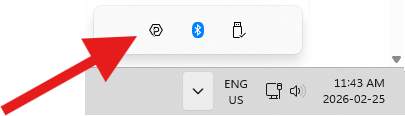
| | After installing, you can find the application through your system tray, or by opening the start menu and searching for ''Phidget Control Panel''. |
|
| |
|
| ==Getting started with Windows==
| |
| Welcome to using Phidgets with Windows. If you haven't already, check out the [[:Category:UserGuide|user guide]] for your device. If you are ready to go, the first step in creating Windows applications with Phidgets is installing the Phidget libraries!
| |
|
| |
|
| ===Installing=== | | [[Image:Os_windows_systemtray.png|link=|center]] |
|
| |
|
| To install the libraries, follow these steps:
| |
|
| |
|
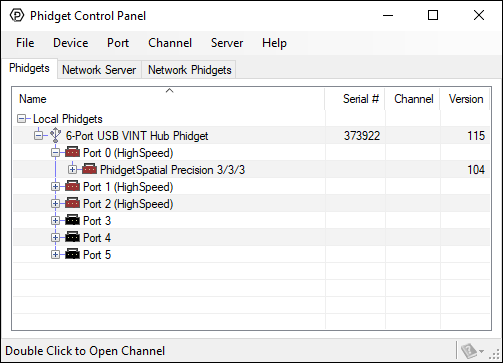
| | After opening, you will see all the Phidgets that are plugged into your machine, as well as any Phidgets that are on your network. |
|
| |
|
| 1. Download the Phidget installer for your system
| |
|
| |
| *[{{SERVER}}/downloads/phidget22/libraries/windows/Phidget22-x86.exe 32 Bit Installer Download]
| |
| *[{{SERVER}}/downloads/phidget22/libraries/windows/Phidget22-x64.exe 64 Bit Installer Download]
| |
|
| |
|
| |
| 2. Continue with the installation
| |
|
| |
| [[image:Windows_Install.png|link=|center]]
| |
|
| |
|
| |
| Success! You have finished installing the Phidgets software on your machine. Before you begin coding, let's verify that your Phidget is able to communicate with your machine.
| |
|
| |
| ===Verify===
| |
| The best way to verify that your libraries are installed and your Phidget is working is to use the Phidget Control Panel. The Phidget Control Panel is a powerful tool that will help you develop your Phidgets applications. Get started by following the instructions below:
| |
|
| |
|
| |
| 1. Find the [[File:Ph.jpg]] icon in the taskbar. If it is not there, open up the start menu and search for ''Phidget Control Panel''
| |
|
| |
| [[File:Windows PhidgetTaskbar.PNG|link=|center]]
| |
|
| |
|
| |
| 2. Double-click on the Phidgets icon to bring up the Phidget Control Panel. You can now see all the Phidgets that are plugged into your machine, as well as any Phidgets that are on the network.
| |
|
| |
|
| [[File:Windows ControlPanel General.PNG|link=|alt=Windows Control Panel General|center]] | | [[File:Windows ControlPanel General.PNG|link=|alt=Windows Control Panel General|center]] |
|
| |
|
|
| |
|
| 3. Click on the + beside a device to expand it so that you can see all available channels. Double-click on one of these channels to open up a window that lets you interact with it.
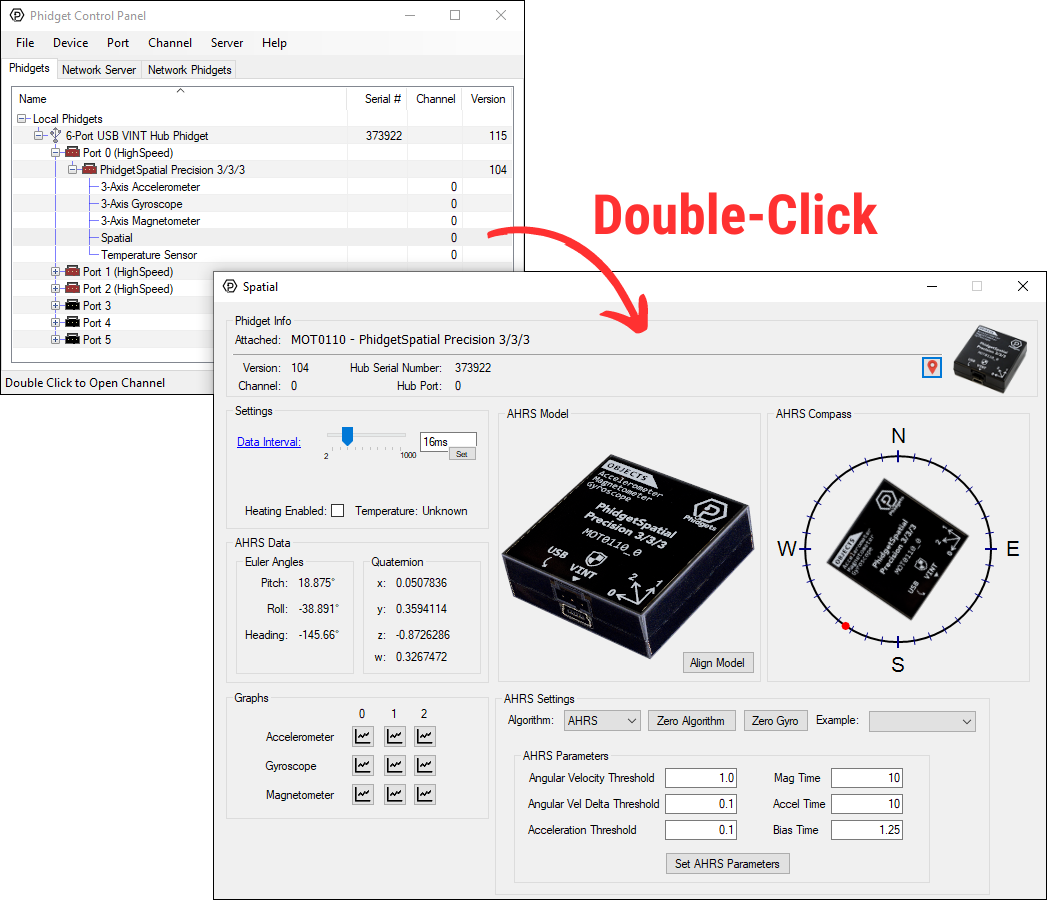
| | Click on the '''+''' beside a device to expand it so that you can see all available channels. Double-click on one of these channels to open up a window that lets you interact with it. |
| | |
| [[File:Windows ControlPanelChannel.PNG|link=|alt=Windows Control Panel General|center]]
| |
|
| |
|
|
| |
|
| The Phidget Control Panel can be used for testing devices, updating firmware, enabling a network server, and more! Visit the [[Phidget Control Panel#Windows|Phidget Control Panel]] page if you want to delve a little deeper.
| | [[File:Controlpanel_openapplication.png|500px|link=https://cdn.phidgets.com/docs/images/b/bd/Controlpanel_openapplication.png|alt=Windows Control Panel General|center]] |
|
| |
|
| Your Phidget is now able to communicate with your development machine. The next step is selecting a programming language so you can start to write some code!
| |
|
| |
|
| ''If you do not see your device in the Phidget Control Panel, visit the [[General Troubleshooting|general troubleshooting page]].''
| | The Phidget Control Panel can be used for testing devices, updating firmware, enabling a Phidget Network Server, and more. Visit the [[Phidget Control Panel|Phidget Control Panel page]] for more information. |
|
| |
|
| ===Programming=== | | ===Programming=== |
| Ready to write some code? Select one of the programming languages below:
| | When you are ready to develop your own applications, visit our [{{SERVER}}/docs/Programming_Resources programming resources page] and select your programming language to get started. |
| | |
| ''Great choices for beginners:''
| |
| *[[Language - C Sharp|C#]]
| |
| *[[Language - C/C++|C/C++]]
| |
| *[[Language - Java|Java]]
| |
| *[[Language - Python|Python]]
| |
| | |
| ''Also supported:''
| |
| *[[Language - JavaScript|JavaScript]]
| |
| *[[Language - Visual Basic .NET|Visual Basic .NET]]
| |
| *[[Language - LabVIEW|LabView]]
| |
| *[[Language - Max/MSP|Max/MSP]]
| |
| | |
| ==Phidget Network Server==
| |
| The Phidget Network Server is an extremely useful feature of Phidgets that allows you to remotely control Phidgets over your network. If you haven't already, check out the [[Phidget Network Server]] page for a complete overview.
| |
| | |
| ===Try it out!===
| |
| In order to try the Phidget Network Server out, first download and install [http://www.apple.com/support/downloads/bonjourforwindows.html Bonjour for Windows] on your host computer and your client computer.
| |
| *Host computer: the computer that is physically connected to the Phidgets via USB and is running the Phidget Network Server.
| |
| *Client computer: a computer running a Phidgets application that accesses Phidgets connected to the host computer.
| |
| If you only have one computer, don't worry, your machine can act as both a host and a client.
| |
| | |
| | |
| Next, follow these steps:
| |
| | |
| 1. Open the Phidget Control Panel on the host computer. Do this by double-clicking on the [[File:Ph.jpg|link=]] icon in your taskbar, or, by searching for ''Phidget Control Panel'' in the start menu.
| |
| Navigate to the Network Server tab, you will see the following:
| |
| | |
| | |
| [[File:windows_networkserver.PNG|link=|center]]
| |
| | |
| | |
| From here, you can start, stop, or restart the Network Server. You can also decide how and when the Network Server will start.
| |
| | |
| | |
| [[File:windows_networkserver_startuptype.png|link=|center]]
| |
| | |
| | |
| 2. Select automatic as the startup type from the list and press the start button. By enabling automatic startup, the Network Server will run immediately after Windows boots, so you won't have to manually start it again. You can verify the Network Server is running by looking at the label located at the bottom left of the Phidget Control Panel.
| |
| | |
| | |
| Now that you have the Network Server running on your host computer, the next step will be accessing the Phidgets connected to your host computer from your client computer. Follow the steps below:
| |
| | |
| | |
| 1. Open the Phidget Control Panel on your client computer. You will see something like this:
| |
| | |
| | |
| [[File:Windows_controlpanel_remote.PNG |link=|center]]
| |
| | |
| | |
| As you can see from the image above, remote Phidgets are listed under the following heading:
| |
| *Remote Server: Servername (link local address)
| |
| | |
| | |
| 2. You now have access to the Phidgets that are connected to your host computer. Try double-clicking one of them to bring up an example:
| |
| | |
| | |
| [[File:Windows_controlpanel_remoteexample.PNG|link=|center]]
| |
| | |
| | |
| Note the label in the example indicating a remote connection. This means the example is using the Network Server in order to communicate with the Phidget.
| |
| | |
| ===What's next?===
| |
| Now that you have seen the Network Server in action, you may be interested in implementing an application that takes advantage of all it's features. Luckily, every programming language we support comes with example code on how to do this! Jump to [[#Programming|programming languages]] above.
| |
| | |
| For more information about the Network Server tab on the Phidget Control Panel, visit the Visit the [[Phidget Control Panel#Windows|Phidget Control Panel]] page.
| |
| | |
| ==Advanced Information==
| |
| | |
| ===Manual File Installation===
| |
| | |
| The Phidget installer installs the most commonly used files onto your system. However, there may be special cases where you want to install the Phidget libraries without the automatic installer. This section will describe the purpose of the most important files file and cover how to manually install the libraries. You can get the files [{{SERVER}}/downloads/libraries/Phidget22-windevel.zip here]. Once you've moved every file and folder in that .zip into the locations in the table in the next section, your manual installation will be complete.
| |
| | |
| ====Description of Library files====
| |
| | |
| Here is the list of files and their description for each file the installer puts onto your system. You don't need to know this if you're just using our installer, but if you are looking to distribute our libraries with your code (without your clients having to use our installer) this list will help you pick and choose what you need. Please note that not all of these files are available in the package linked above.
| |
| | |
| {| class="wikitable"
| |
| | align="center" colspan="2" style="color:white; background:black;"| Location: '''C:\Program Files\Phidgets\Phidget22'''
| |
| |-
| |
| | align="center" style="background:#f0f0f0;"|'''File'''
| |
| | align="center" style="background:#f0f0f0;"|'''Description'''
| |
| |-
| |
| | phidget22.dll||contains the actual Phidget library, which is used at run-time.
| |
| |-
| |
| | phidget22.lib||is used by your compiler to link to the dll. Your compiler has to know where this file is, by default our installer puts {{Code|phidget22.lib}} into {{Code|C:\Program Files\Phidgets\Phidget22}}, so you can either point your compiler to that location, or copy and link to it in a directory for your project workspace. {{Code|phidget22.lib}} is written to be compatible with most compilers - but your specific compiler may need a different format. Check our documentation for your specific compiler for details.
| |
| |-
| |
| | x86 Folder|| contains the versions of {{Code|phidget22.lib}} and {{Code|phidget22.dll}} that are optimized for 32-bit systems. This folder will only appear on 64 bit installations and is useful if you want to code against the 32-bit libraries.
| |
| |-
| |
| | NetworkServer.exe||is used to control Phidgets remotely across a network using the [[Phidget Network Server]]
| |
| |-
| |
| | phidget22.h||lists all the Phidget API function calls available to your code. Your compiler also has to know where this file is. By default, our installer puts {{Code|phidget22.h}} into {{Code|C:\Program Files\Phidgets\Phidget22}} so you can either point your compiler to that location, or copy and link to it in a directory for your project workspace.
| |
| |-
| |
| | phidget22.jar||is an archive containing the Phidgets library, used by the [[Language - Java | Java]] programming language.
| |
| |-
| |
| | Phidget22.NET.dll||is the Phidgets library for the .NET framework used by .NET languages such as [[Language - C Sharp | C#]] and [[Language - Visual Basic .NET | Visual Basic .NET]].
| |
| |-
| |
| | Phidget22.NET.XML||provides the IntelliSense in-line documentation for the .NET library in Visual Studio.
| |
| |-
| |
| | Phidget22java.dll||is the library for Phidgets in Java.
| |
| |-
| |
| | Phidget22Manager.exe||is the [[Phidget Control Panel]], a tool to quickly determine whether your system is able to control Phidgets, and also acts as a debugging tool.
| |
| |-
| |
| | align="center" colspan="2" style="color:white; background:black;"| Location: '''C:\Windows\System32'''
| |
| |-
| |
| | phidget22.dll||contains the actual Phidget library, which is used at run-time.
| |
| |-
| |
| | Phidget22java.dll||is the library for Phidgets in Java.
| |
| |-
| |
| | align="center" colspan="2" style="color:white; background:black;"| Location: '''C:\Windows\SysWOW64'''
| |
| |-
| |
| | phidget22.dll||contains the actual Phidget library, which is used at run-time.
| |
| |-
| |
| |}
| |
| | |
| ===Windows in a Virtual Machine===
| |
| | |
| Phidgets can also be used inside a virtual machine. Instructions for VMWare and VirtualBox are provided below. Virtual PC is not supported as USB Phidgets requires a virtual platform that supports HID USB Devices and since Virtual PC does not support HID USB devices, Phidgets may not be used.
| |
| | |
| As always, please ensure that you have the latest Phidget [[#Quick Downloads | drivers]] installed on the virtual machine and that you are using the latest version of your virtual software.
| |
| | |
| <b>VMWare:</b>
| |
| | |
| To enable USB Phidgets, select Virtual Machine -> Removable Devices -> and select the Phidget Input Device -> Connect.
| |
| | |
| <b>VirtualBox</b>
| |
| | |
| To enable USB Phidgets, VirtualBox Guest Additions(Devices -> Install Guest Additions) may need to be installed. Afterwards, click on Devices -> USB Devices and select the Phidget device to enable. The state should go from Busy to Captured. VirtualBox may bring up a new hardware wizard in the host operating system, which has to be installed. Please note that Phidgets with USB hubs (for example, the [{{SERVER}}/products.php?product_id=1019 1019 Interface Kit with 6-port hub]), are undetectable; Fortunately, Phidgets that are attached to such Phidgets are detectable.
| |
| | |
| Note that Windows XP "mode" in Windows 7 does '''not''' support Phidgets.
| |
| | |
| ===Installing Without an Internet Connection===
| |
| When running the Phidgets installer it will check for other applications such as .NET. Part of this requires an active internet connection. The downside to this is that even if you have the applications installed already, if you do not have an internet connection you cannot complete the installation process. There is a way around this however which involves extracting the Phidget22 .msi file out of the .exe installer. To do this follow these steps:
| |
| | |
| *Run the installer.
| |
| | |
| [[image:Windows_Install.png|link=|center]]
| |
| | |
| *Once the installer has started up and you are at the first informational window, navigate to your
| |
| {{Code|Local Disk\Users\"username"\AppData\Local\Temp}} folder.
| |
| *Look for the most recently modified folders. The Phidgets one will not have an obvious title, most likely a seemingly random string of numbers and characters.
| |
| | |
| [[image:Windows_Installer_Folder.jpg|link=|center]]
| |
|
| |
|
| *In this example the folder was named "IXP000.tmp" but it may be different for you. In the folder you will find the {{Code|Phidget22_x64.msi}} or {{Code|Phidget22_x86.msi}} file. This file can be run to install the Phidgets libraries without needing an internet connection.
| | ==Software License== |
| | By downloading the installer and/or development files, you agree to adhere to the terms of the [{{SERVER}}/documentation/Licenses/Phidgets_EULA.pdf Phidgets End User License Agreement]. The Phidget libraries and development files are covered by the The 3-Clause BSD License. |